Skin Rituals
Over exfoliation happens when the total intensity of acids, scrubs and renewing treatments exceeds what the skin can comfortably tolerate.
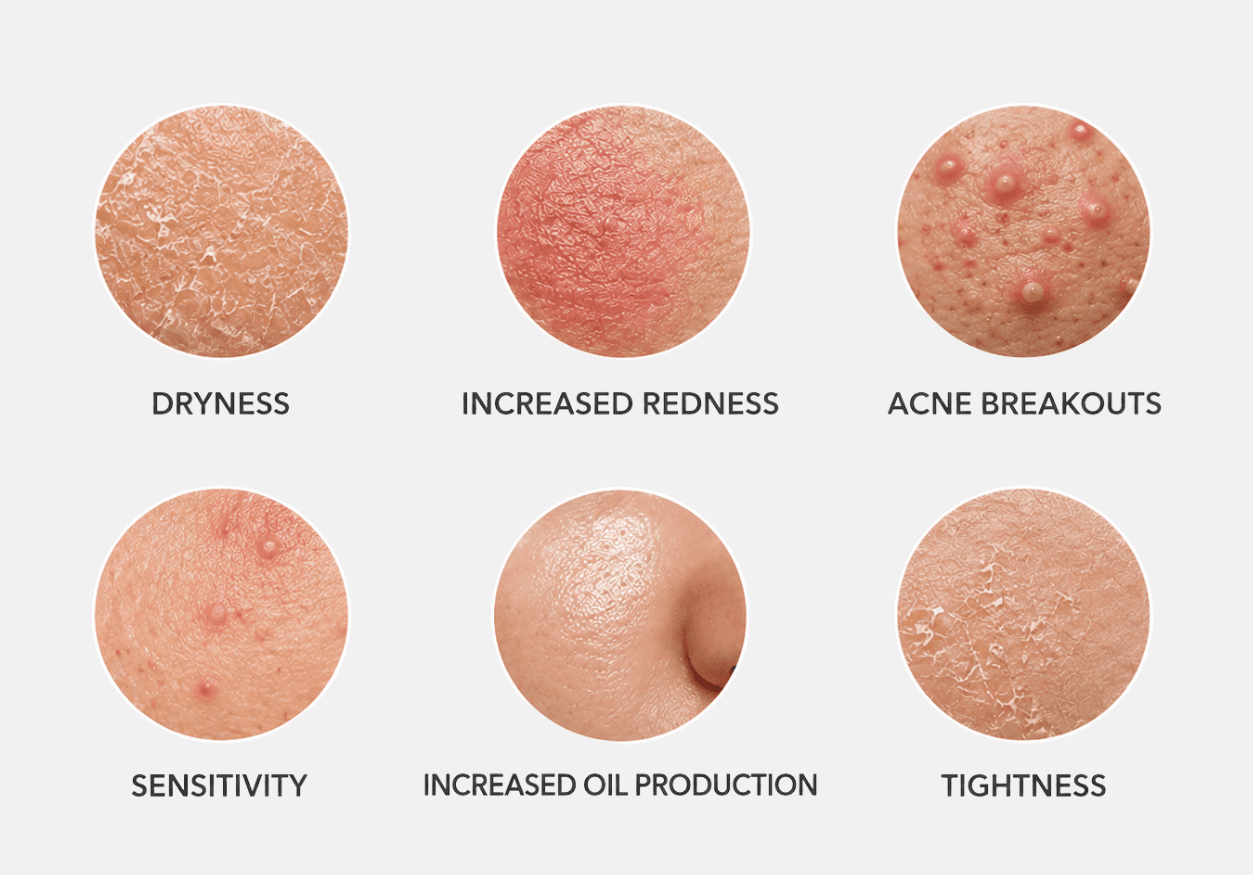
Exfoliation is designed to make shedding more efficient.
Depending on the method, it loosens the connections between surface cells or removes them through physical friction. Used appropriately, it can improve rough texture, clogged pores and uneven tone.
The problem begins when exfoliation stops being one considered step and becomes the hidden theme of the entire routine.
An acid toner in the morning. An exfoliating cleanser at night. Retinol twice a week. A scrub when the skin still looks dull.
Each product may appear reasonable alone. Together, they can create more irritation than the routine was designed to manage.
Over exfoliation is often not one extreme decision. It is several ordinary decisions added together.
Smoothness does not prove that the skin is healthier
Chemical exfoliants such as glycolic acid work by reducing cohesion between cells in the stratum corneum, allowing older surface cells to detach more easily. Their effect depends on the acid, concentration, pH, formulation and frequency of use.
A freshly exfoliated surface may feel smoother and reflect light more evenly.
That does not mean the skin has become thinner in a dangerous sense or that every glow is an illusion. Appropriate exfoliation can improve appearance without compromising barrier function.
But repeated irritation can reduce surface hydration, increase redness and make ordinary products harder to tolerate.
The useful distinction is not between exfoliation and no exfoliation.
It is between controlled renewal and repeated irritation.
Signs the routine may have crossed the line
There is no single clinical test for over exfoliation at home, but a change in comfort can be revealing.
Watch for:
• Burning when applying products that were previously comfortable
• Persistent redness or tenderness
• Tightness combined with unusual shine
• Flaking around the nose, mouth or chin
• A smooth but sensitive surface that feels easily irritated
• Increasing discomfort after every exfoliating session
• Dark marks developing after areas become inflamed
These symptoms can also occur with eczema, rosacea, contact dermatitis or another reaction. They should not automatically be blamed on exfoliation, particularly when they continue after exfoliating products are stopped.
Acids are not the only source
Exfoliation may be present in more places than expected.
The routine may include:
• An exfoliating cleanser
• An acid toner
• A peeling serum
• Retinoids that alter cell turnover
• Scrubs, cleansing brushes or textured pads
• Acne treatments that increase dryness
• Professional peels or resurfacing procedures
Retinoids are not exfoliants in exactly the same way as acids or scrubs, but they can cause redness, scaling and barrier impairment, particularly during early use or when combined with other irritating treatments.
Heat and hot water do not exfoliate the skin, but they may intensify the discomfort of a routine that is already irritating.
Recovery does not follow a ten day rule
When the skin begins burning or flaking, pause the products most likely to be contributing.
This may include acids, scrubs, retinoids and strong acne treatments. Keep cleansing gentle, use a comfortable moisturiser and continue sun protection when it can be applied without stinging.
Moisturisers can support hydration and reduce water loss while the irritated surface recovers.
There is no universal ten day pause.
Mild irritation may improve sooner. More significant reactions may take several weeks or require medical treatment. Resume exfoliation only when cleansing and moisturising no longer sting and visible redness or scaling has settled.
Reintroduce one method, not the previous stack
A routine does not need an acid, scrub and retinoid simply because they work differently.
Choose the method that matches the concern.
For clogged pores: salicylic acid may be useful
For rough surface texture: an alpha hydroxy acid may be suitable
For acne or visible ageing: a retinoid may serve the larger treatment goal
Begin at the frequency directed by the product or a dermatologist. Once or twice weekly may be a cautious starting point for some cosmetic exfoliants, but it is not a universal scientific rule.
Observe the skin before increasing use.
Do not add a second exfoliating step simply because the first one does not create an immediate sensation.
Stinging is not the measure of a successful formula
Acids can produce mild temporary sensations in some formulas, but persistent burning, prolonged redness or tenderness are not necessary signs of efficacy.
Concentration and pH influence both the action and irritation potential of alpha hydroxy acids, which is why stronger percentages should not be treated as automatically more advanced.
The best frequency is the one that produces the intended benefit without creating a routine the skin must repeatedly recover from.
Exfoliation should make shedding more orderly, not make sensitivity the price of smoothness.
Radiance is not sustained by removing more skin.
It is sustained by knowing when the exfoliating step has already done enough.