Skin Theory
Understand why some skincare feels heavy and how formulation, layering, climate, and skin condition shape the experience.
What causes that sticky, greasy or “sitting on the skin” feeling?
We often judge skincare with our fingertips before we judge it in the mirror.
“It feels sticky.”
“It takes forever to sink in.”
“It sits under makeup.”
That experience is real, but it cannot usually be blamed on one ingredient.
The weight of a product is created by the whole formula: how easily it spreads, how much friction it creates during application, how quickly its water or volatile components evaporate and what kind of film remains behind.
In formulation science, these behaviours are studied through rheology and tribology, essentially, how a product flows and how it moves against the skin.
Heavy is a sensation, not a measurement
A cream can look rich in the jar and still melt quickly across the skin. Another may look lightweight but leave behind tackiness or a noticeable coating.
That is because viscosity and oil content alone do not reliably predict how a product will feel. Research comparing emollients has found that products with similar formats or lipid levels can still have very different sensory profiles.
What we call “heavy” may actually be a combination of:
resistance while spreading
lingering stickiness
a waxy or greasy afterfeel
slow evaporation
a more noticeable surface film
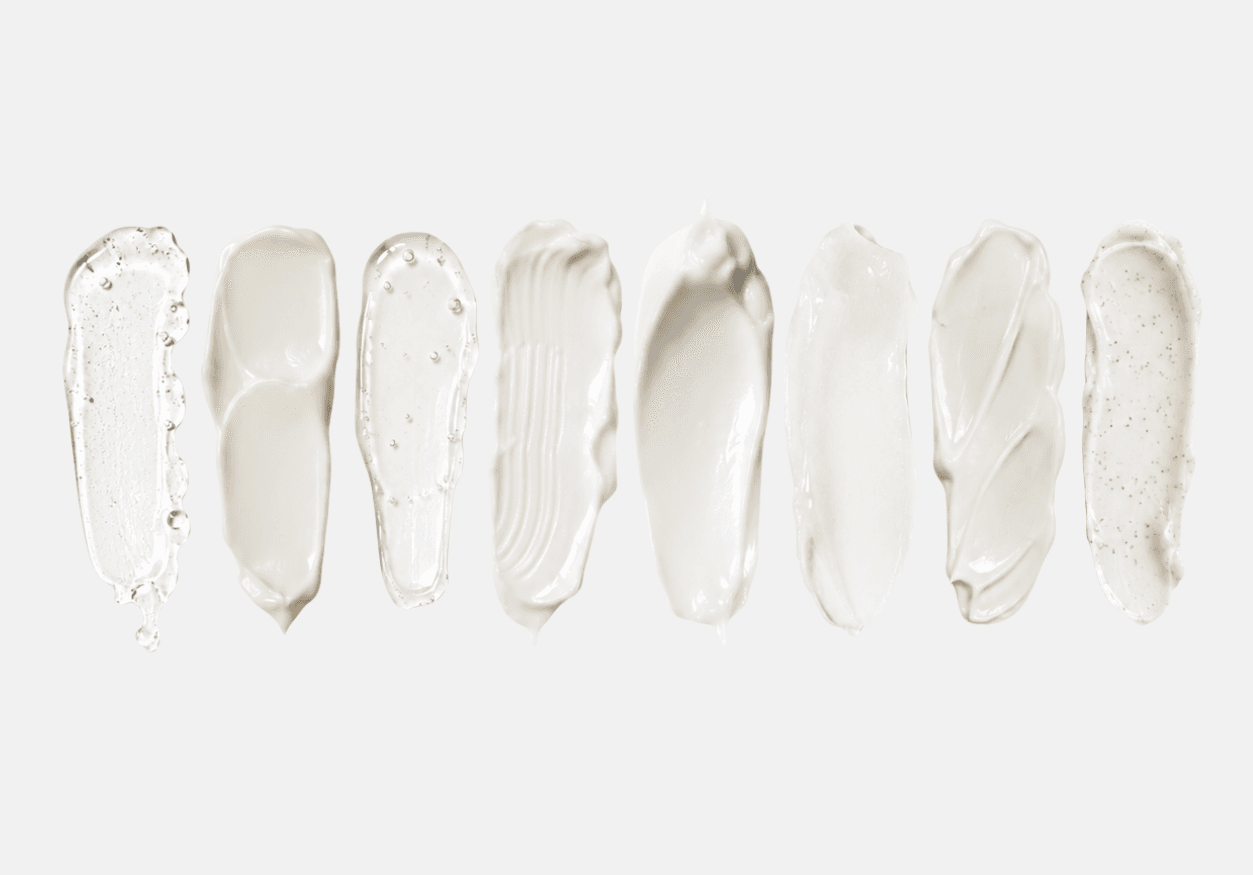
Texture is not simply what a product contains. It is how those ingredients behave together.
Why some formulas linger
Waxes, butters, oils, silicones and other film-forming ingredients can all influence afterfeel, but none is automatically heavy.
Their effect depends on their proportion, physical properties and how they are combined with emulsifiers, thickeners and other emollients. The internal structure of an emulsion, including the size and distribution of its droplets can also affect firmness, spreadability, adhesion and skin feel.
Even manufacturing matters. Changes in how a cream is mixed or processed can alter its microstructure and produce a different sensory experience, despite a similar ingredient list.
This is why two products containing shea butter or silicone may feel completely different on application.
Ingredients suggest the possibilities. Formulation decides the experience.
Climate changes the way texture feels
A formula does not exist in isolation from its environment.
In warm or humid conditions, sweat and surface oil can make a rich or strongly film-forming product feel more noticeable. Under sunscreen and makeup, several layers may also interact, increasing tackiness or causing products to roll into small flakes, a phenomenon commonly called pilling.
The skin has not “run out of space to absorb.” Most skincare is not meant to disappear fully into the deeper skin. It spreads, evaporates, interacts with the outer surface and leaves behind ingredients that perform there.
Using too much product, layering incompatible textures or applying each layer before the previous one has settled can make that remaining film feel heavier than intended.
Does lightweight mean less effective?
Not at all.
A lightweight texture may be created using easily spreading emollients, carefully selected thickeners and a formula that becomes less resistant as it is rubbed across the skin. Formulators call this shear-thinning behaviour: the product remains stable in its container but flows more easily during application.
Spreadability and viscosity can influence how evenly a topical formula is applied, but a pleasant texture does not automatically make a product more or less effective.
The best texture is the one that delivers its intended function while remaining comfortable enough to use consistently.
Because “heavy” is rarely a verdict on an ingredient.
It is usually a conversation between formula, quantity, climate, layering and personal preference.
Weightless skincare is not skincare without substance. It is substance engineered to leave less of itself behind.