Skin Theory
Explore how the skin barrier protects, regulates, and supports every function that keeps skin healthy.

The skin barrier is often described as a wall.
But a wall simply blocks. Your barrier does something far more intelligent: it controls the exchange between your skin and the world around it. It helps keep water in, limits the entry of irritants and supports the skin as it responds to everything from weather and cleansing to friction and pollution.
It is less like a wall and more like a highly selective boundary.
So, what is the skin barrier?
The barrier’s main protective work happens in the stratum corneum, the outermost part of the skin.
It is commonly compared to bricks and mortar:
Corneocytes, or flattened skin cells, form the bricks.
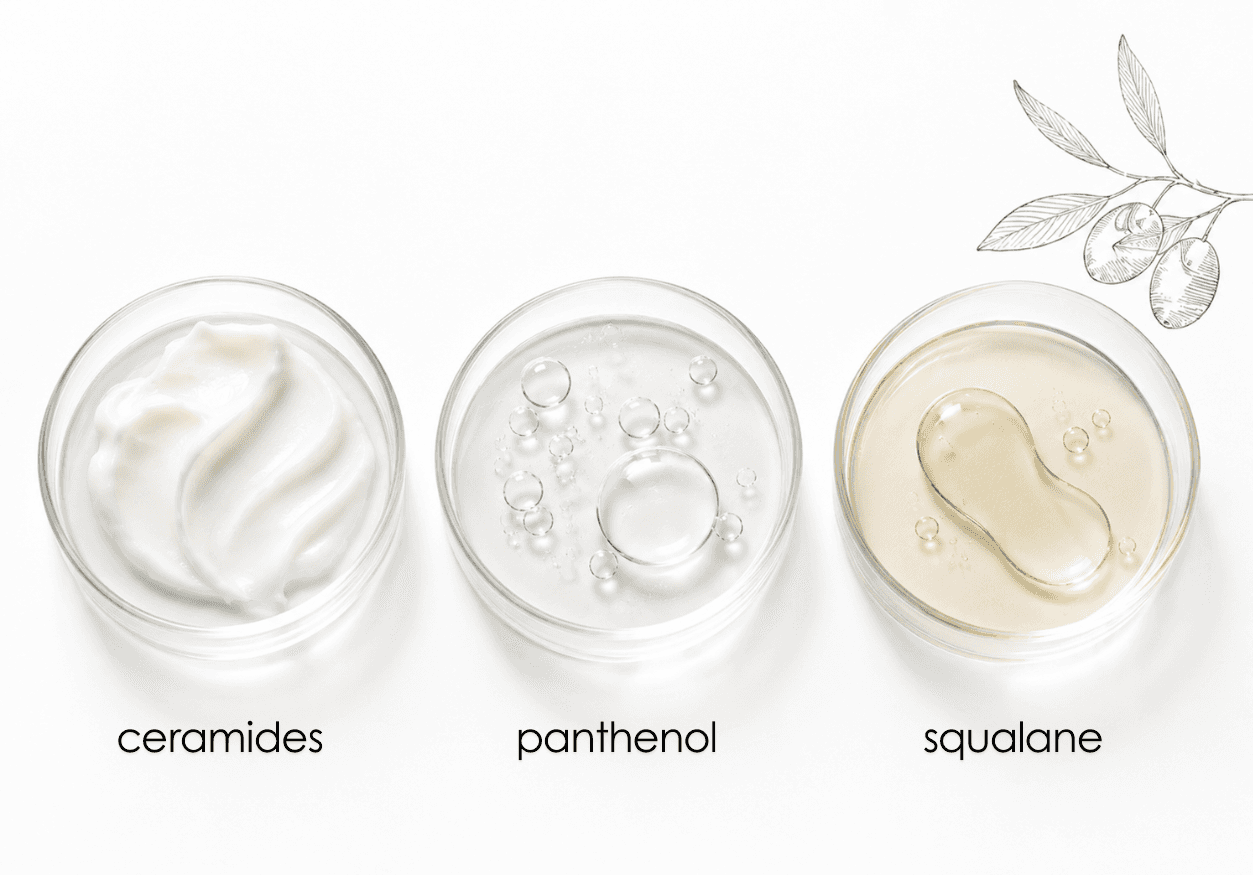
Ceramides, cholesterol and fatty acids form the lipid structure around them.
These lipids are arranged in organised layers that help slow water loss and make it harder for unwanted substances to pass through.
When this structure is functioning well, the skin is better able to hold hydration and tolerate everyday exposure.
What happens when it is disrupted?
Your barrier is not fragile, but it is not indestructible either.
Repeated over-cleansing, harsh products, excessive exfoliation, UV exposure and environmental stress can interfere with barrier function. When that happens, water escapes more easily through the skin, a process measured as transepidermal water loss, or TEWL.
You may notice:
tightness after cleansing
dryness or flaking
products suddenly stinging
increased redness or sensitivity
skin that feels both oily and dehydrated
These signs do not always confirm a “damaged barrier,” but they may suggest that the skin is not coping comfortably with its current routine.
Sometimes, sensitive skin is not asking for another solution. It is asking for less disruption.
Can skincare rebuild the barrier?
Skin already has its own repair processes.
Humectants such as glycerin can help the outer layers of the skin retain water. Emollients and occlusives can soften the surface and reduce moisture loss. Formulas containing barrier lipids, including ceramides, may also support water retention and barrier function when they are appropriately formulated.
Familiar ingredients are useful. Intelligent formulation is what makes them functional.
What does a healthy barrier look like?
Not necessarily glossy. Not poreless. Not permanently calm.
A well-functioning barrier is often quieter than that.
It holds water more effectively. It is less easily unsettled by ordinary cleansing and environmental changes. It allows active ingredients to be used with greater consistency rather than through repeated cycles of irritation and recovery.
A healthy barrier does not need to announce itself. You notice it in how reliably the skin behaves.
Because skin health begins at the boundary.
And when that boundary is respected, hydration, comfort and visible radiance have a stronger foundation to build on.