Skin Concerns
Reducing pigmentation safely means controlling the trigger, choosing a precise treatment and avoiding irritation that can leave another mark behind.
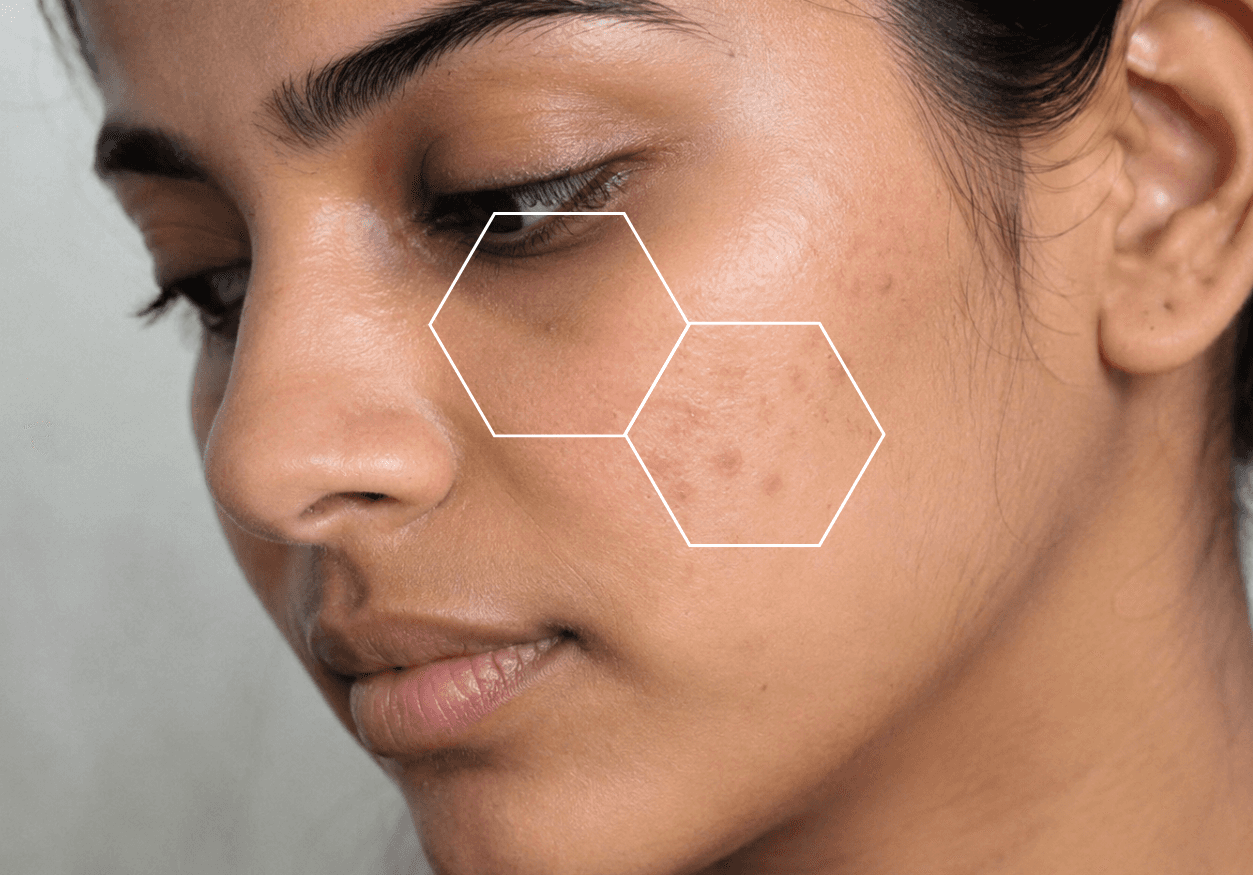
Pigmentation is not one concern with one solution.
A dark mark left by acne behaves differently from melasma, sun induced spots or pigmentation caused by friction. Before choosing another brightening ingredient, it helps to understand what is continuing to stimulate the colour.
The safest treatment begins with identifying the pigment, not attacking it.
Start with what is creating the mark
Melanin is produced as part of the skin’s normal protective biology. Pigmentation can become more noticeable after ultraviolet exposure, inflammation, acne, injury or repeated irritation.
Post inflammatory hyperpigmentation develops after inflammation alters pigment production or distribution. This is why picking breakouts, rubbing the skin and repeatedly irritating the same area can make a mark darker or help it remain visible for longer.
The first step is therefore not always a brightening serum.
It may be:
• Controlling active acne
• Reducing friction
• Stopping an irritating product
• Treating eczema or another inflammatory condition
• Seeking professional assessment for persistent or symmetrical patches
Treating the colour without controlling its cause often means treating the same mark repeatedly.
Make protection part of the treatment
Broad spectrum sunscreen is not simply the final step of a pigmentation routine. It helps prevent ultraviolet exposure from continuing to stimulate pigment.
Visible light may also contribute to melasma and post inflammatory pigmentation, particularly in deeper skin tones. For concerns affected by visible light, tinted sunscreens containing iron oxides may provide more useful protection than an untinted ultraviolet sunscreen alone.
Choose a sunscreen that can be applied generously and worn consistently.
A practical approach includes:
• Broad spectrum protection with SPF 30 or higher
• Reapplication during extended outdoor exposure
• Shade, hats and reduced direct midday exposure
• A tinted formula when visible light sensitive pigmentation is a concern
Heat can aggravate conditions such as melasma in some people, but heat itself should not be described as another form of ultraviolet radiation.
Choose a pathway, not a pile of actives
Pigment correction can happen at different stages.
Niacinamide can reduce the transfer of melanosomes from pigment producing cells into surrounding skin cells. Clinical studies have reported improvements in visible hyperpigmentation after continued use.
Alpha arbutin, azelaic acid and certain licorice compounds can influence pathways involved in melanin production. Their effects depend on concentration, formulation and the kind of pigmentation being treated.
Tranexamic acid has been studied most extensively for melasma. Topical results are promising, but they vary across formulas, concentrations and study designs. It should not be presented as simply calming all inflammatory signals that create pigmentation.
Retinoids and hydroxy acids may support gradual surface renewal and have evidence for post inflammatory pigmentation. They can also irritate the skin when introduced too quickly or used too frequently.
The best routine does not necessarily contain one ingredient from every category.
It contains enough treatment to influence the concern without creating a second inflammatory problem.
Irritation is not a faster route to clarity
A tingling serum, peeling treatment or freshly polished surface can create a quick impression of brightness.
That immediate change may come from smoother texture and stronger light reflection. It does not necessarily mean that excess pigment has already decreased.
In skin that develops post inflammatory marks easily, irritation can contribute to new pigmentation. Aggressive peels and procedures carry a particular risk in deeper skin tones when they are poorly selected or performed.
Watch for:
• Persistent burning
• Redness that continues after application
• New flaking or tenderness
• Skin that becomes increasingly reactive
• Marks becoming darker around irritated areas
These are reasons to reduce frequency or stop the irritating product, not proof that the treatment is reaching deeper pigment.
Build a routine that can be repeated
A safe pigmentation routine may be surprisingly simple.
Morning
Gentle cleansing when needed
One suitable brightening product
Moisturiser when required
Broad spectrum sunscreen
Evening
Thorough but comfortable cleansing
One targeted treatment
Moisturiser
Begin with one pigment focused product rather than layering several new treatments together. Introduce it gradually, observe how the skin responds and increase frequency only when it remains comfortable.
Clinical studies commonly assess visible changes over several weeks. Some niacinamide studies have reported improvement from around four weeks, while other combination studies have continued for ten to twelve weeks. That does not create one guaranteed timeline for every ingredient or every form of pigmentation.
Know when skincare is not enough
Pigmentation that spreads, changes suddenly, appears symmetrically across the face or does not improve with appropriate care may need assessment by a dermatologist.
Melasma, post inflammatory pigmentation and sun related spots do not always require the same treatment. Prescription ingredients and procedures can be useful, but they should be selected carefully, especially for skin that pigments easily.
Safe brightening is not the absence of powerful ingredients. It is the use of the right ingredient, for the right pigment, at a strength the skin can tolerate consistently.
The aim is not to erase natural colour.
It is to reduce uneven pigment without creating another reason for the skin to produce it.
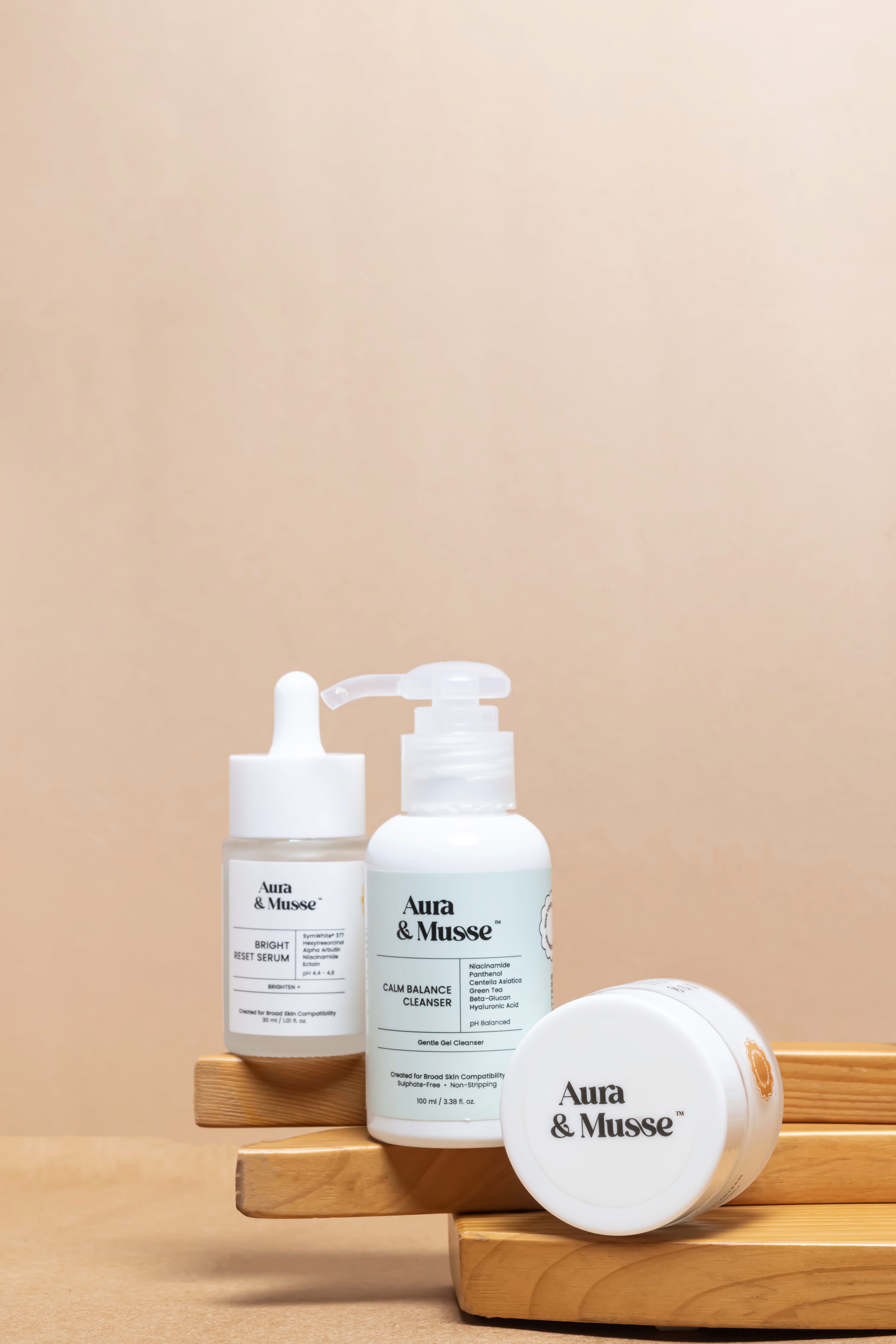
Shop our newest launch: Bright Reset Serum