Ingredients
Hyaluronic acid is an effective hydrator, but concentration, molecular size and the complete formula matter more than how many times it appears in your routine.
Hyaluronic acid has become skincare shorthand for hydration.
It appears in toners, serums, moisturisers, masks and sunscreens, often with the suggestion that more forms, more molecular weights and more layers must produce more hydrated skin.
But hyaluronic acid does not become more intelligent simply because it appears several times in one routine.
Its performance depends on how it is formulated, what remains on the skin after application and whether the final texture is comfortable enough to use.
What hyaluronic acid actually does
Hyaluronic acid is a naturally occurring sugar molecule with a strong affinity for water. In skincare, it functions primarily as a humectant and film forming ingredient, helping increase hydration and improve the temporary appearance of smoothness and plumpness.
The familiar claim that it holds one thousand times its weight in water is repeated widely, but it should not be treated as a universal measurement of what happens inside every cosmetic formula.
The amount of water hyaluronic acid can retain depends on factors such as:
• Its molecular weight
• Its concentration
• The surrounding humidity
• The other ingredients in the formula
• The physical form in which it is used
Clinical research supports the ability of topical hyaluronic acid formulas to improve skin hydration, although results vary considerably between products.
Hyaluronic acid is useful because of how it manages water, not because of an impressive marketing ratio.
Does it pull water out of the skin?
A popular warning claims that hyaluronic acid draws water from deeper skin when the air is dry, eventually making the surface more dehydrated.
This explanation is not well established by clinical evidence.
Topical hyaluronic acid mainly acts within or above the outer layers of the skin. Larger forms tend to remain closer to the surface, where they can form a hydrating film. Smaller forms may travel further into the stratum corneum, depending on their size and the delivery system.
If a hyaluronic acid serum leaves the skin feeling tight, the more likely explanations include:
• The serum forms a film that feels tense as it dries
• The formula contains too few softening ingredients
• Too much product has been applied
• Several similar formulas have been layered
• The skin was already dry or irritated
• The product simply does not suit the user
That uncomfortable feeling is valid. The explanation does not need to involve hyaluronic acid stealing water from deeper tissue.
What overuse really looks like
Using hyaluronic acid in several products is not inherently harmful.
There is no defined amount at which the skin becomes overloaded with it. The issue is usually sensory rather than biological.
Hyaluronic acid can increase viscosity and form a flexible film. At higher concentrations, particularly with larger molecular forms, that film may feel sticky, tight or slightly glossy. Its concentration and molecular weight strongly influence how thick and structured the formula becomes.
When several hyaluronic acid products are layered, those films can accumulate.
The result may be:
• Tackiness that remains after application
• Pilling beneath sunscreen or makeup
• A shiny surface with little lasting comfort
• Tightness as watery layers dry
• The feeling that products are sitting on top of one another
This is not proof that the skin has received too much hydration.
It may simply mean the routine contains too many products performing the same textural role.
Repeated ingredients can create repeated sensation without creating repeated benefit.
Do multiple molecular weights work better?
Hyaluronic acid is available in different molecular sizes.
Larger molecules generally remain closer to the surface, where they contribute to film formation and immediate hydration. Smaller molecules may penetrate further into the outer skin, although penetration does not automatically mean better performance.
Studies have reported hydration benefits from formulas containing different molecular weights, but this does not prove that every serum advertising three, five or eight sizes is superior.
The evidence also does not support a simple map in which each molecular size neatly hydrates a different skin layer.
Molecular weight is one formulation decision.
Concentration, stability, delivery and the rest of the ingredient system remain equally important.
How to use it more intelligently
Hyaluronic acid does not always need to be applied to dripping wet skin. A well formulated product already contains water and should be designed to function as directed.
It also does not always require a separate oil or heavy cream on top.
What matters is whether the routine offers both immediate hydration and lasting comfort.
A practical approach is to:
• Use one well formulated hydrating product rather than several repetitive ones
• Apply only the quantity needed to cover the skin evenly
• Follow with a suitable moisturiser when the serum alone feels insufficient
• Reduce layers when tackiness or pilling appears
• Judge the complete formula rather than searching only for hyaluronic acid on the label
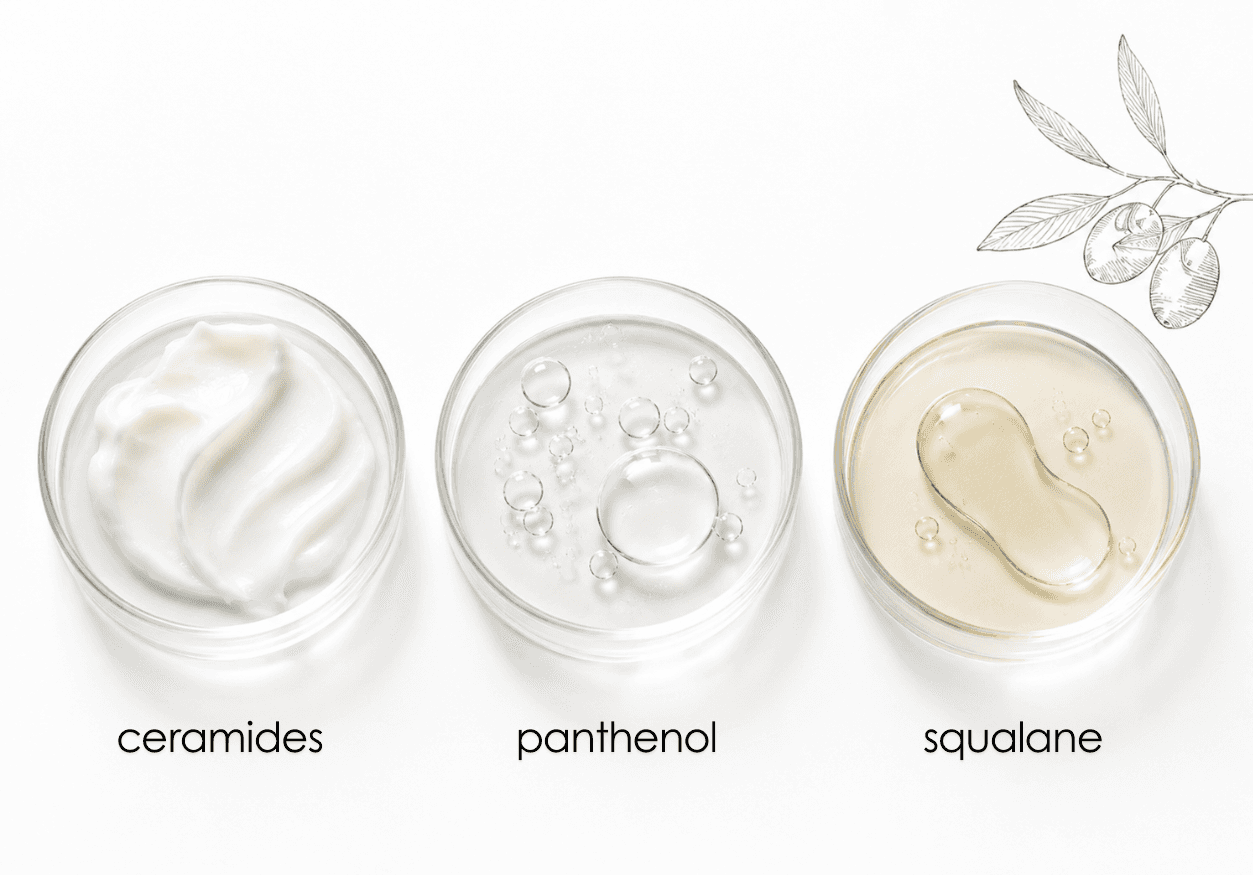
Glycerin, panthenol, emollients and moisture sealing ingredients can complement hyaluronic acid, but there is no mandatory pairing that every routine must follow.
Hyaluronic acid is not a complete moisturising strategy on its own.
It is one tool within one.
The smartest use of hyaluronic acid is not maximum layering. It is placing the right amount inside a formula that knows what to do after the water arrives.