Ingredients
Brightening works best when ingredients address pigmentation through precise pathways, without turning irritation into part of the process.
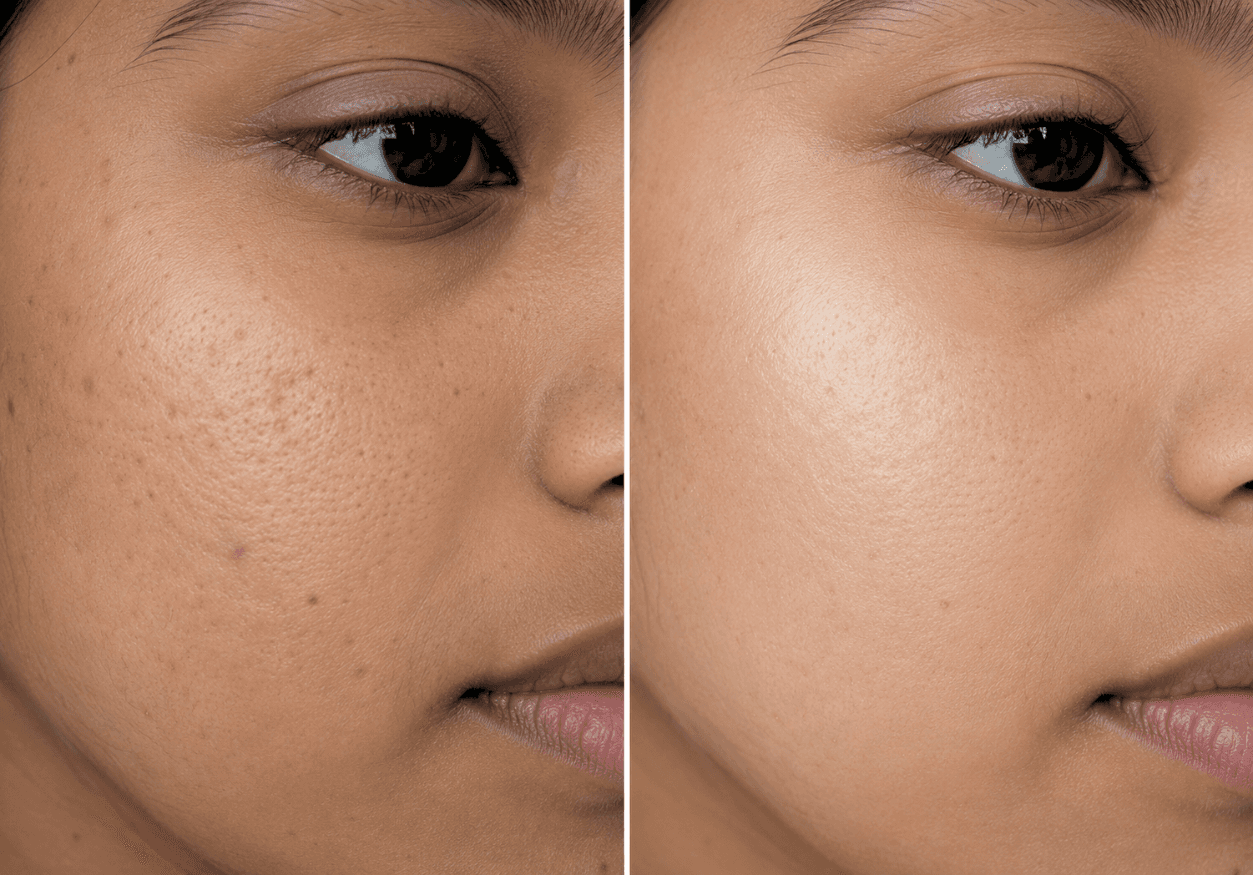
Brightening is often treated as one single action.
In reality, uneven tone can involve several stages: pigment production, pigment transfer, inflammation and the way existing marks gradually become visible at the surface.
This is why intelligent brightening does not depend on making one ingredient as strong as possible.
It depends on choosing ingredients that work at the right points in the process.
Pigmentation is not a skin malfunction
Melanin is produced by specialised cells called melanocytes and transferred to surrounding skin cells. It contributes to natural skin colour and helps absorb part of the ultraviolet radiation reaching the skin.
The concern is not melanin itself.
It is uneven or excessive pigment activity, which may follow ultraviolet exposure, acne, inflammation, injury or certain hormonal influences. Post inflammatory hyperpigmentation is particularly connected to the intensity and depth of the inflammation that came before it.
Brightening should refine uneven pigment, not fight the biology that gives skin its colour.
Different ingredients work at different stages
Brightening ingredients are not interchangeable.
• Niacinamide can reduce the transfer of pigment containing melanosomes from melanocytes to surrounding skin cells. It does not appear to work by directly stopping melanin production.
• Tranexamic acid is used in the management of melasma and is thought to influence pathways connected to inflammation, ultraviolet exposure and pigment signalling. Evidence exists for topical use, although results vary across formulations and studies.
• Licorice derived compounds, including glabridin, have shown effects on tyrosinase activity and melanogenesis in laboratory and animal research. The performance of a finished cosmetic formula still depends on the extract, concentration and delivery system used.
One ingredient may influence pigment transfer. Another may influence pigment production. Another may help address inflammatory activity.
Precision comes from understanding the pathway, not collecting every brightening ingredient available.
Why irritation can work against the goal
Exfoliating acids and corrective treatments may improve pigmentation when chosen and used appropriately.
But unnecessary irritation can create a new problem, especially in skin that is prone to post inflammatory marks. Inflammation itself can trigger increased melanin production or alter where pigment is deposited, which is why aggressive treatment may worsen the concern it was meant to correct.
A rapid surface glow after exfoliation is not the same as a gradual improvement in uneven pigmentation.
One is immediate light reflection.
The other requires pigment to be produced, transferred and cleared differently over time.
Combination should be intentional
Using several brightening ingredients together is not automatically unsafe or superior.
A combination can be useful when each ingredient contributes a different function and the completed formula has been designed for tolerability. Clinical research has shown benefits from certain combinations, including niacinamide with N acetyl glucosamine.
The problem begins when several separate serums, exfoliants and treatments are layered without considering their total strength.
A more considered brightening routine asks:
• Which type of pigmentation is being addressed?
• Does each active serve a distinct purpose?
• Is the routine comfortable enough to use consistently?
• Is daily sun protection already in place?
• Is irritation being mistaken for progress?
Brightening should look gradual
Pigment does not become uneven overnight, and it rarely becomes even again after one application.
The most convincing brightening results usually appear through repeated use, careful sun protection and control of the condition causing the pigmentation in the first place.
That may be acne, inflammation, ultraviolet exposure or another underlying trigger.
A brightening serum should not compete with the skin. It should intervene precisely enough that the skin has less to recover from afterward.
The smartest formulas do not ask how many pigment pathways they can attack at once.
They ask which pathways matter, and how quietly they can influence them.
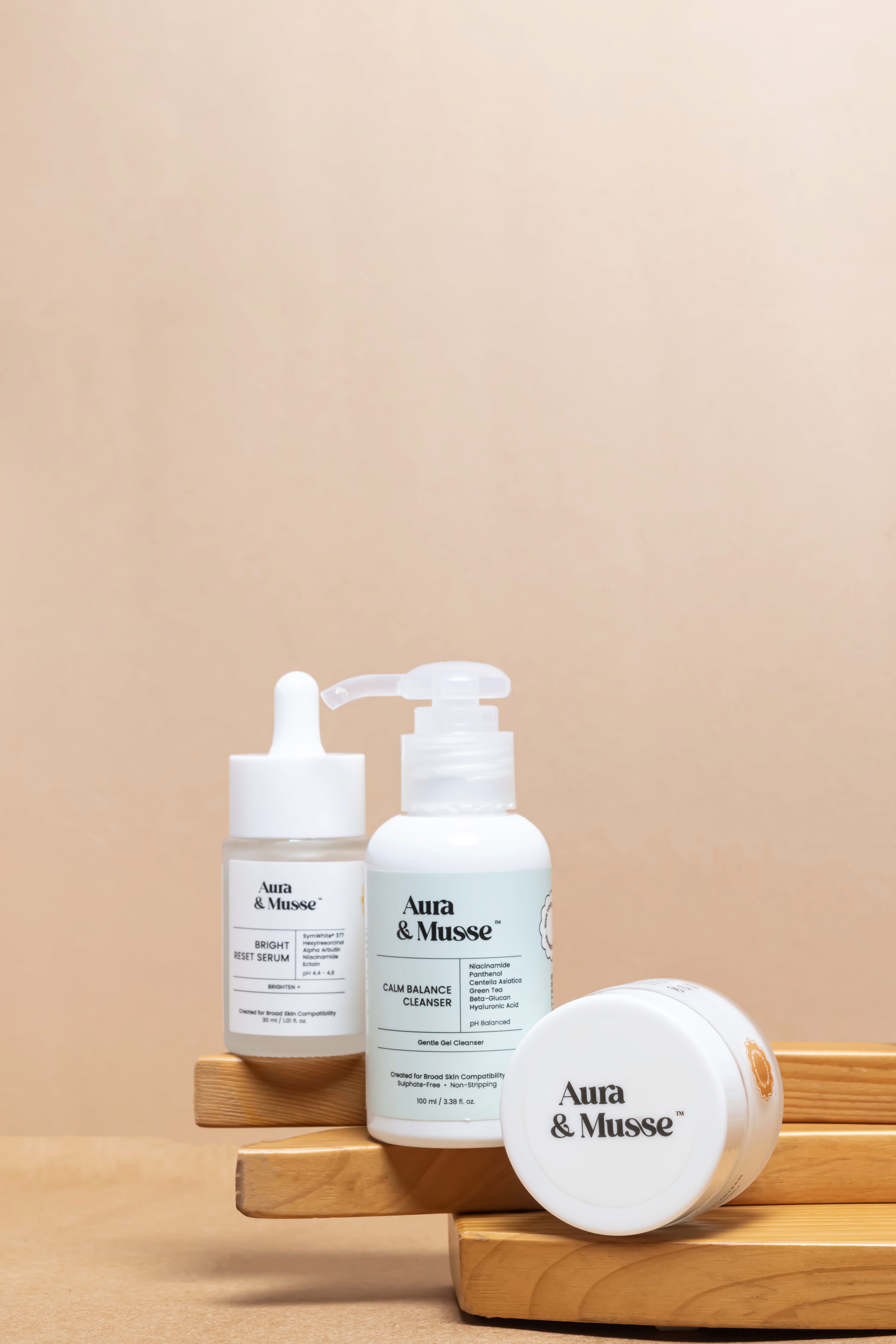
Shop our Bright Reset Serum