Skin Concerns
Oiliness immediately after washing is usually caused by remaining sebum, sweat, product film or climate, not the skin instantly producing replacement oil.

You wash your face, rinse carefully and pat it dry.
Yet within minutes, the surface already looks shiny.
It is tempting to assume that cleansing has triggered the skin to manufacture more oil. But sebaceous glands do not usually replace removed sebum instantly.
In one study measuring facial skin after washing, sebum levels were still reduced after 20 minutes and returned closer to their original levels over approximately two hours.
So what are you seeing immediately after cleansing?
The cleanser may not have removed everything
Sebum does not sit evenly across the face. It collects more heavily around areas with greater sebaceous gland activity, particularly the forehead, nose and chin.
A mild cleanser may remove excess oil without eliminating every trace of it, which is not necessarily a failure. Sebum contributes to surface lubrication and protection.
Water resistant sunscreen, makeup and richer products may also remain when the cleansing method is not suited to what was applied. Research comparing cleansing methods has shown that water resistant sunscreen may require a more effective cleanser or cleansing oil for complete removal.
What looks like fresh oil may therefore be a mixture of remaining sebum and product residue.
It may be sweat rather than sebum
In warm weather, sweat can create shine almost immediately after washing.
Heat increases blood flow to the skin and activates sweat production. Research on summer conditions has also found increases in measured greasiness and sebum secretion during hot environmental exposure.
Sweat, water and small amounts of surface oil reflect light easily. The result can look oily even before a meaningful amount of new sebum has reached the surface.
Shine describes what light is reflecting from. It does not identify which substance created it.
The cleanser itself may leave a film
Some cleansers contain conditioning agents, polymers or emollients that remain lightly deposited after rinsing.
This can be useful when a cleanser is designed to reduce tightness, but certain formulas may leave a slippery, waxy or glossy finish that a user interprets as oil.
Incomplete rinsing, applying too much cleanser or washing with water that is not warm enough to disperse a dense formula may make that residue more noticeable.
A cleanser does not need to leave the face squeaky to be effective.
But it should rinse cleanly enough that the remaining finish feels intentional, not coated.
Harsh cleansing can cause tightness, not instant replacement oil
Strong surfactants and frequent washing can remove surface lipids and increase dryness or irritation.
What they do not reliably do is instruct sebaceous glands to immediately compensate with a surge of oil. A clinical study of a mild facial cleanser found no evidence of sebum overcompensation.
Sebum production is influenced more strongly by factors such as hormones, genetics, age and gland activity.
Harsh cleansing can still create a confusing combination:
• Tightness from reduced surface hydration
• Shine from remaining sebum or sweat
• Redness from friction or irritation
• A stronger desire to cleanse again
This cycle may make skin feel harder to manage, even without a true rebound response.
What about hard water?
Hard water contains higher levels of minerals such as calcium and magnesium.
There is evidence connecting hard water exposure with changes in cleanser deposition and irritation risk, particularly in people with eczema. However, evidence that hard water directly causes facial sebaceous glands to produce more oil is limited.
Hard water may alter how a cleanser lathers or rinses, leaving the surface feeling rough, coated or uncomfortable.
That sensation can be mistaken for oiliness, but the mechanism is not simply that minerals force the skin to increase sebum.
Before changing your entire routine
Ask what kind of shine you are actually seeing.
Shine immediately after rinsing: possibly water, sweat, cleanser film or incomplete removal
Shine appearing gradually: more likely the normal return and spread of sebum
Shine with tightness or stinging: the cleanser may be too harsh, irritating or unsuitable
Shine with persistent congestion: sunscreen, makeup or cleansing technique may need attention
A practical approach is to:
Use a gentle cleanser and rinse it thoroughly
Avoid washing repeatedly whenever shine appears
Cleanse after heavy sweating
Use an appropriate method for water resistant sunscreen or makeup
Apply a lightweight moisturiser when the skin feels tight
Dermatologists generally recommend gentle facial cleansing up to twice daily and after sweating, rather than repeatedly washing throughout the day.
Your face can look oily after washing without producing a sudden flood of new sebum.
Before blaming the skin, look at what may still be on the surface, what the weather is doing and how the cleanser behaves after the water is gone.
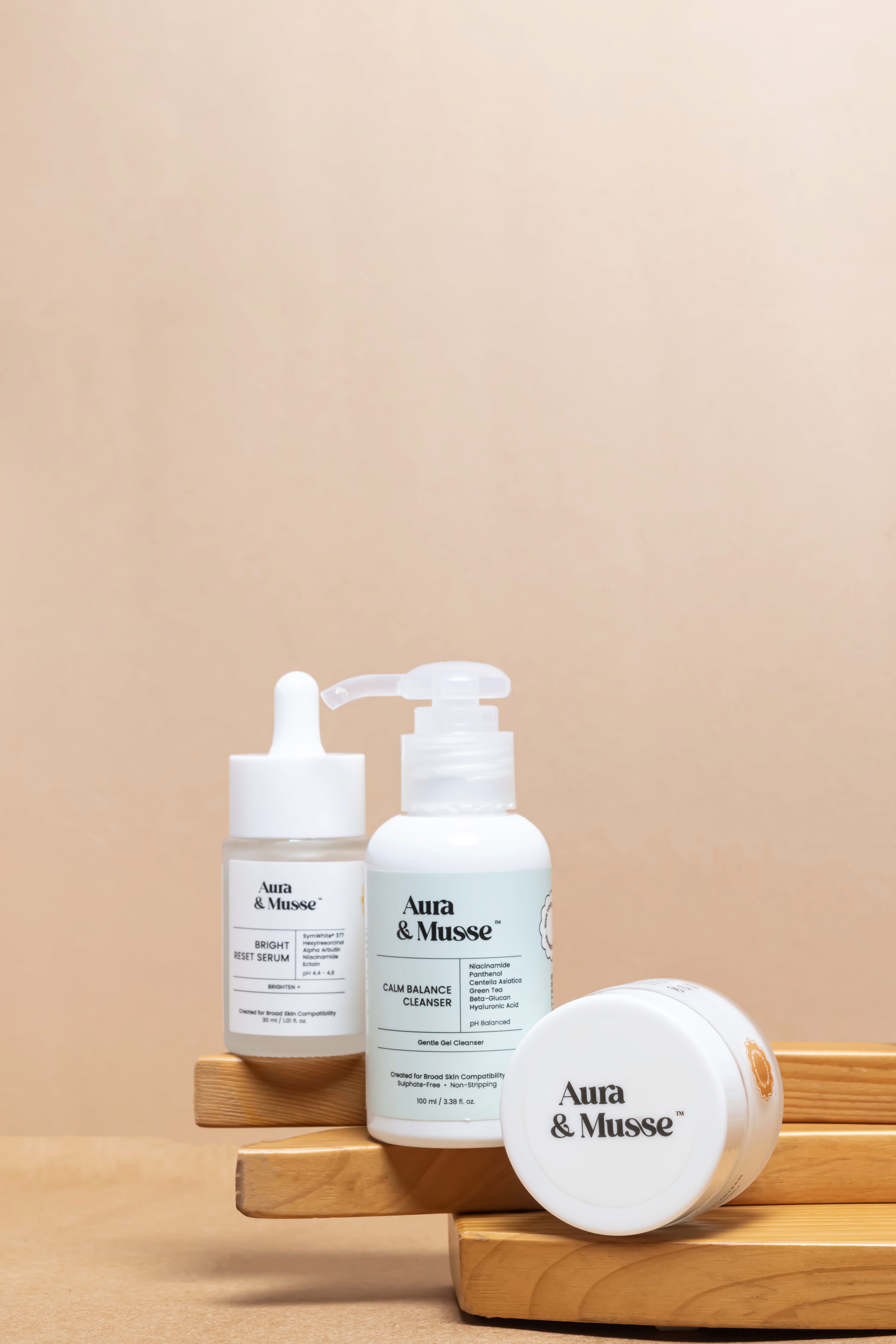
Shop our newest launch: Calm Balance Cleanser